Project Overview
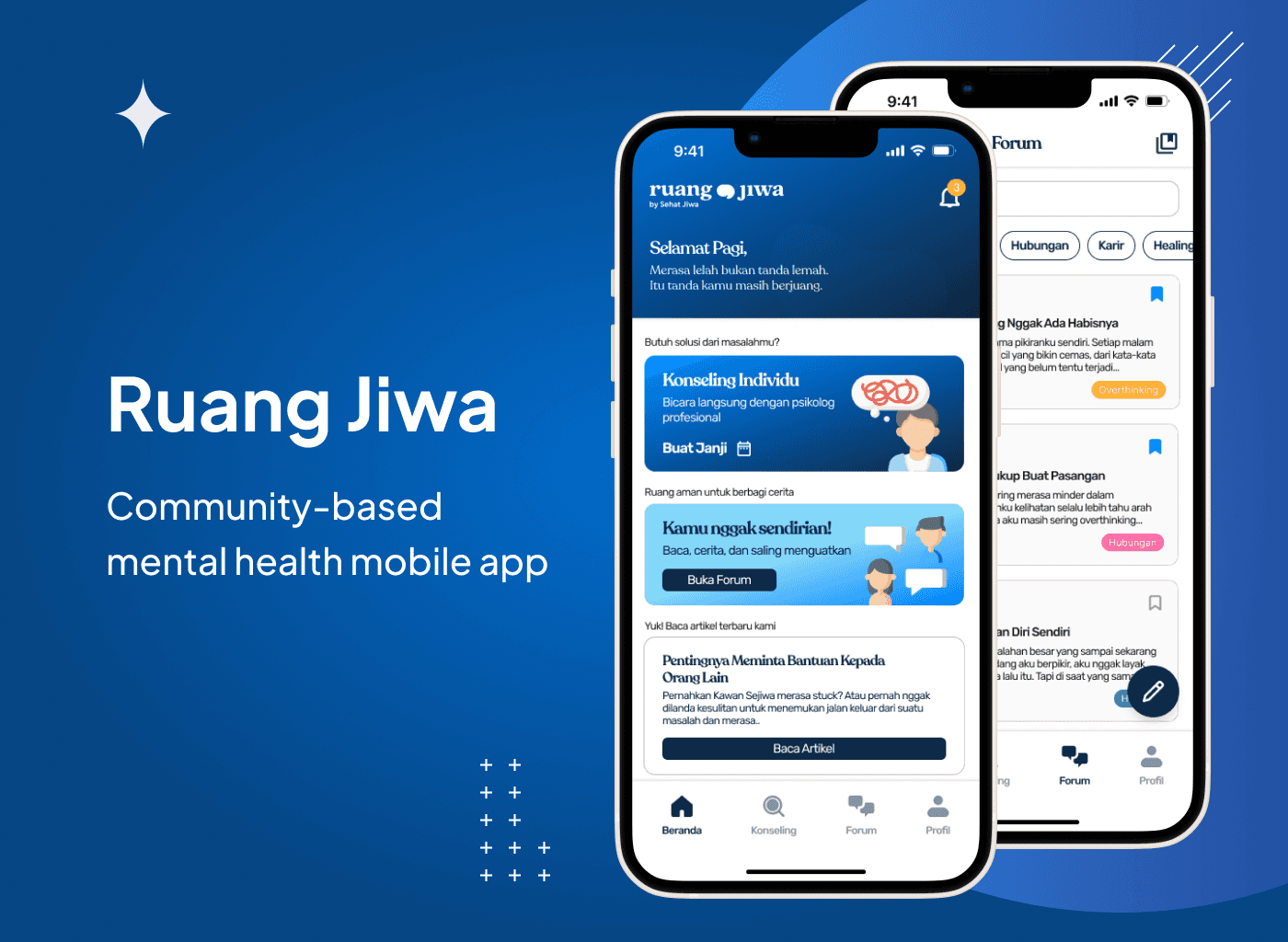
Ruang Jiwa is a community-based mental health mobile app designed to support teenagers and adults dealing with stress, anxiety, loneliness, and quarter-life crisis. The app connects peer support with access to professional psychologists in one platform.
Role: UI/UX Designer
Project Type: 9th IndonesiaNext & Thesis
Platform: Mobile App
Problem
Many young adults:
Are afraid to seek help due to mental health stigma
Feel unheard and emotionally isolated
Struggle to access professional psychological services
Goal
To create a safe, empathetic, and accessible digital space that:
Encourages peer support
Simplifies access to psychologists
Delivers both social impact and business value
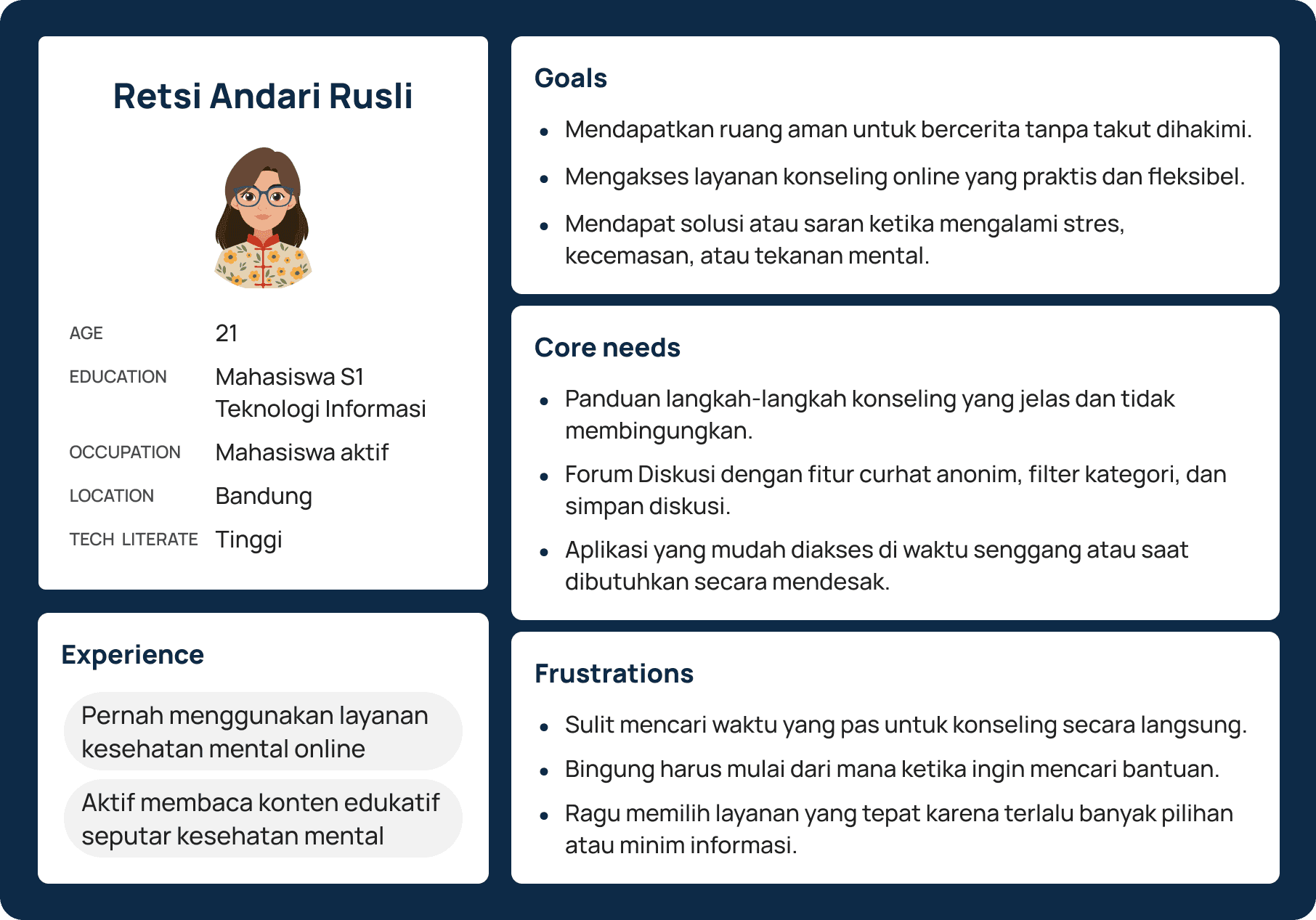
Target Users
Age 17+
Have an interest in mental health
Experiencing academic stress and quarter-life crisis
Digitally literate and comfortable with mobile apps
Research
Method: User-Centered Design
User observation & in-depth interviews
Academic literature review
Key Insights:
Anonymity increases users’ willingness to share
Peer support reduces feelings of loneliness
Users want fast, simple, and private access to psychologists
Problem Definition
Problem: Lack of safe spaces and accessible professional support
User Needs: Privacy, empathy, and trust
Opportunity: Combining supportive communities with professional mental health services
Solution
Ruang Jiwa acts as a bridge between emotional support and professional care, designed with a human-centered and empathetic approach.
Key Features
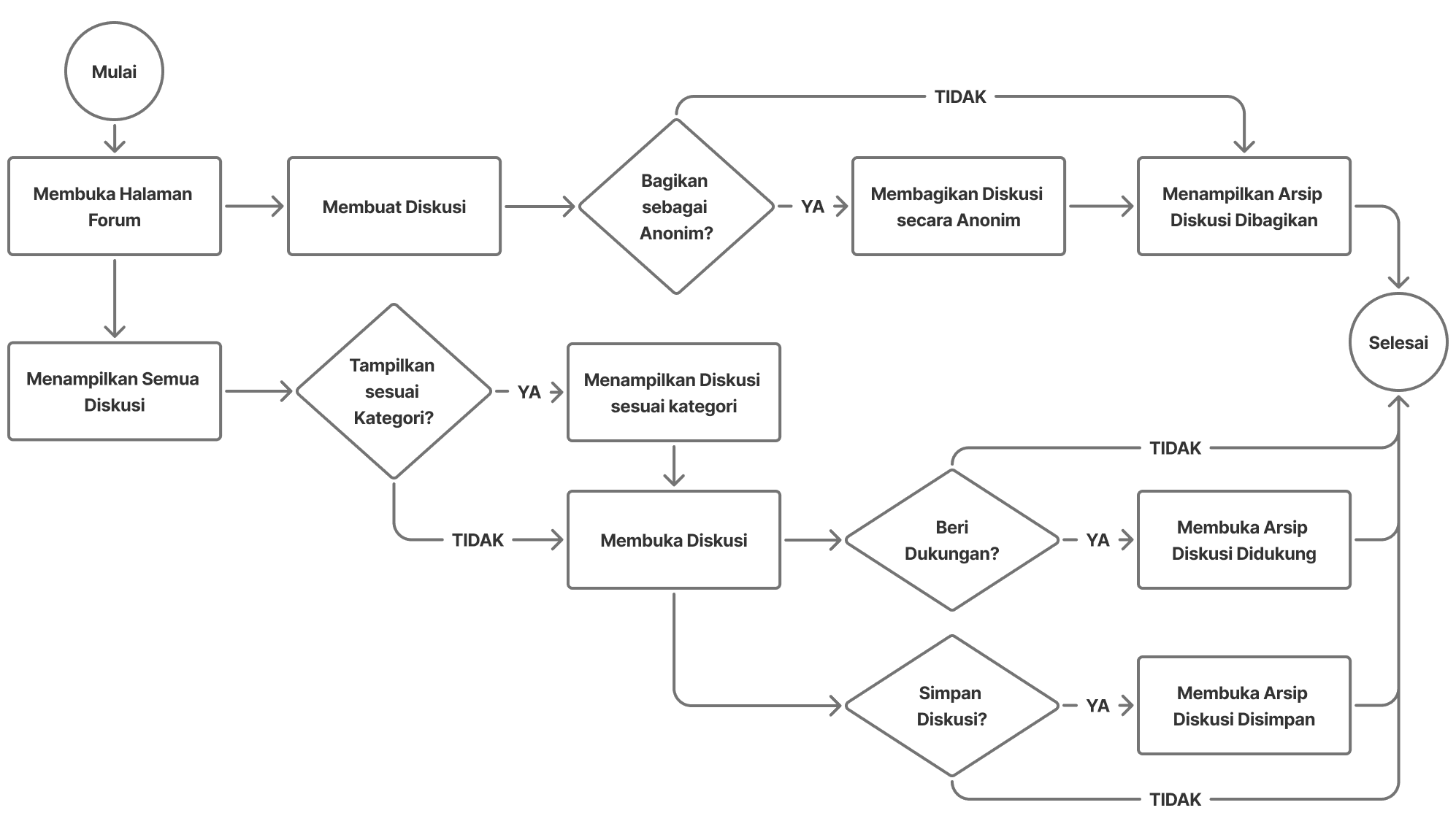
Supportive Community Forum
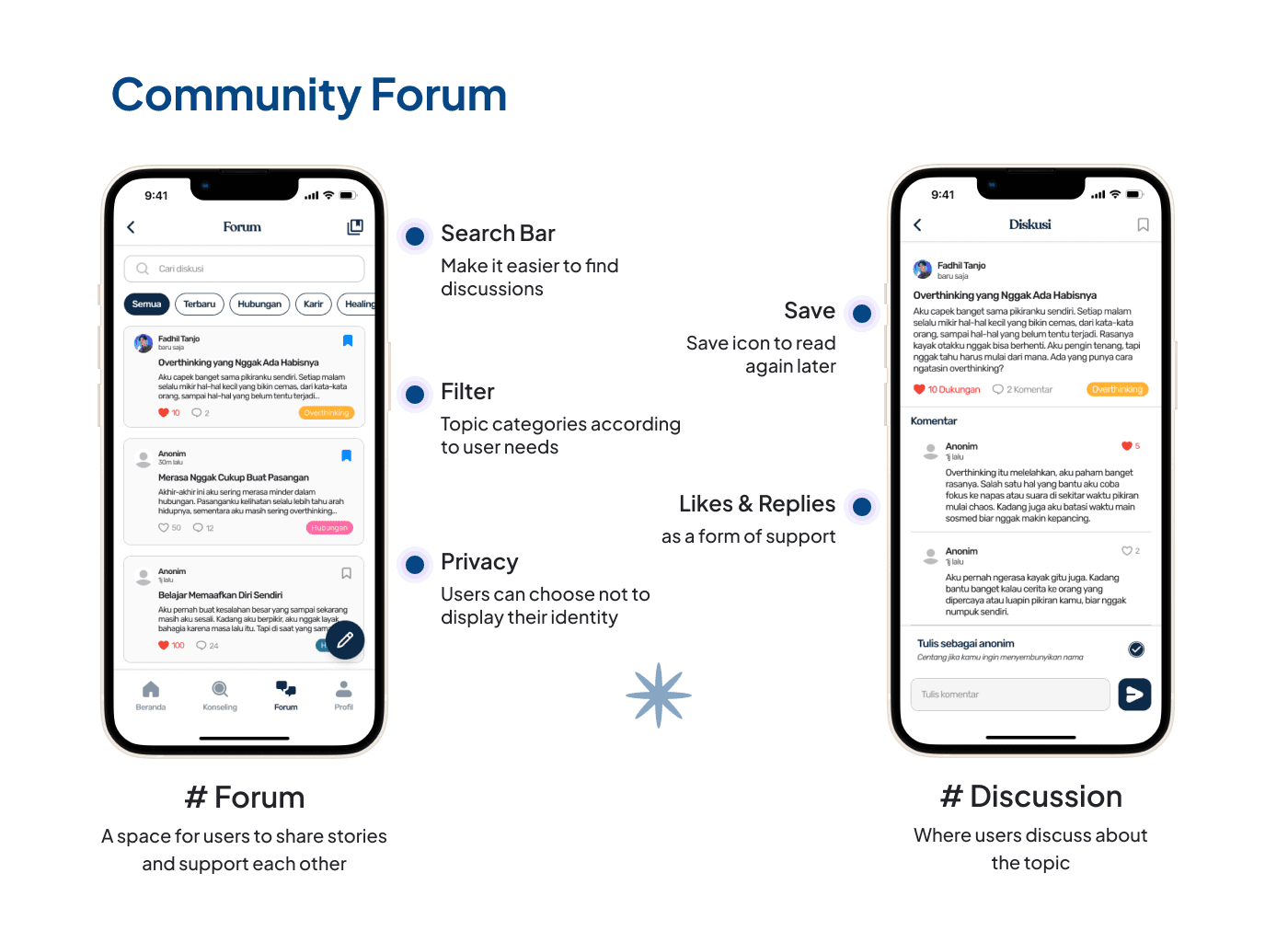
A community space for users to share stories and support each other, with the option to post anonymously based on personal comfort.
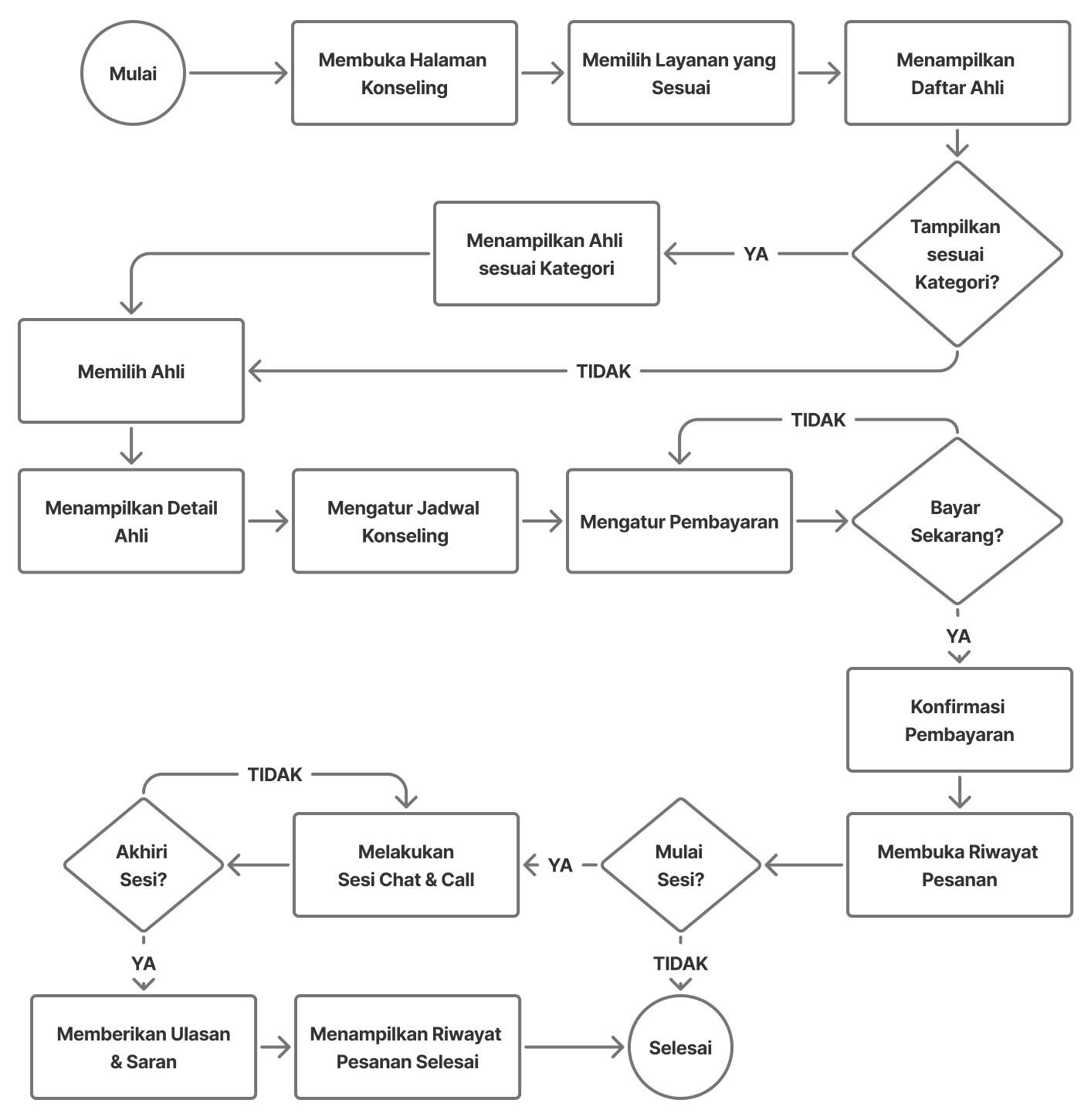
Psychologist Sessions
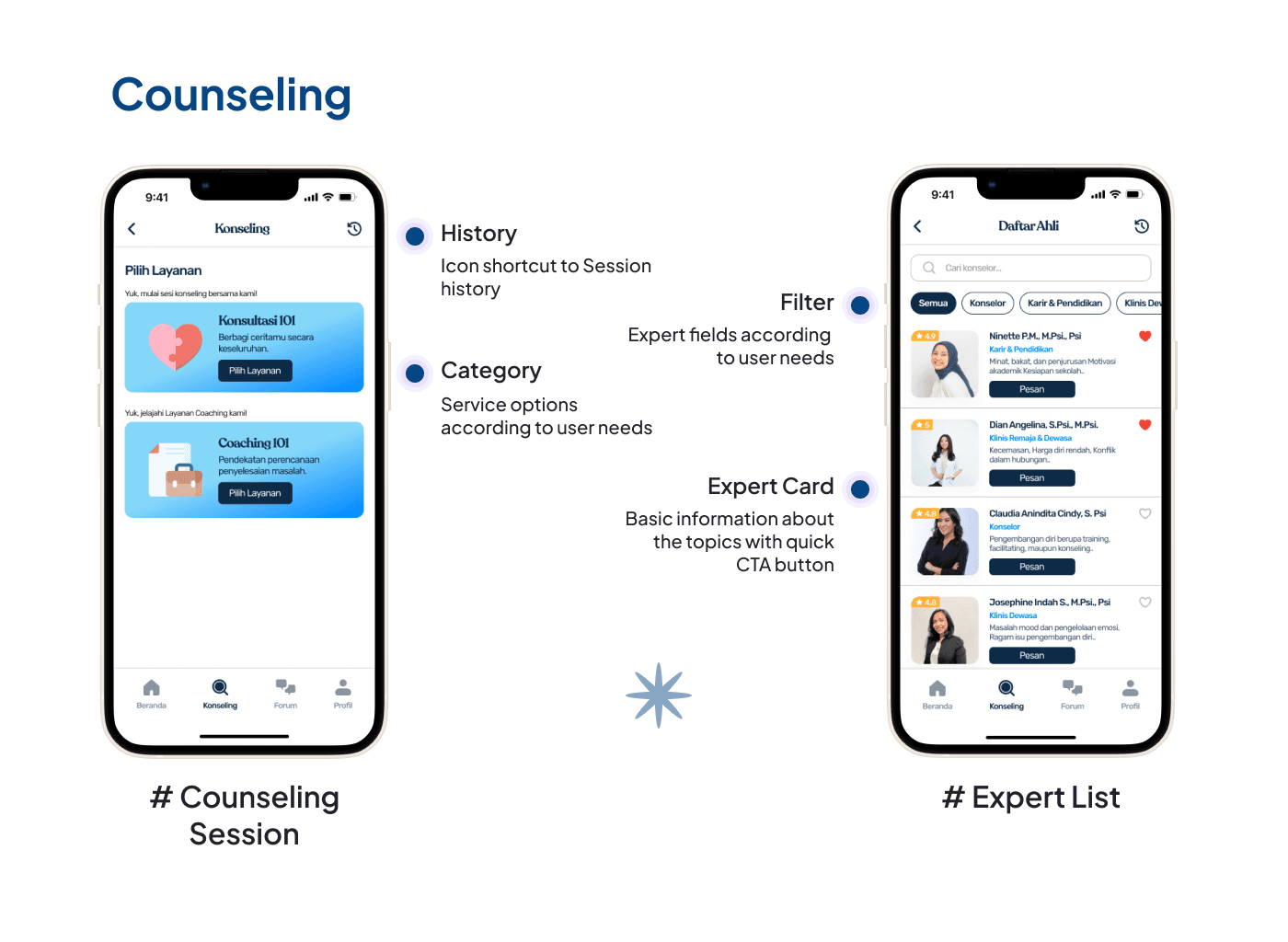
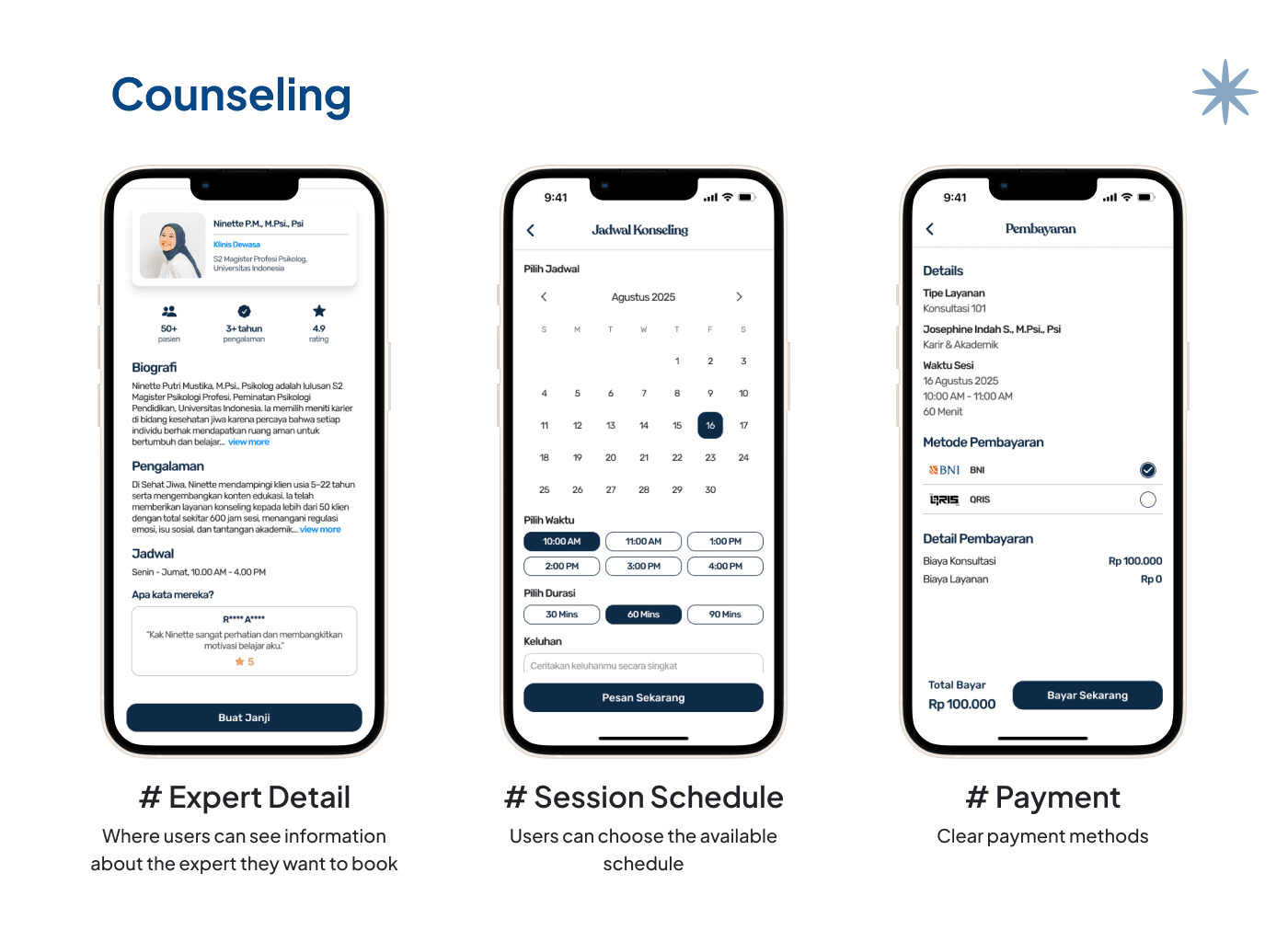
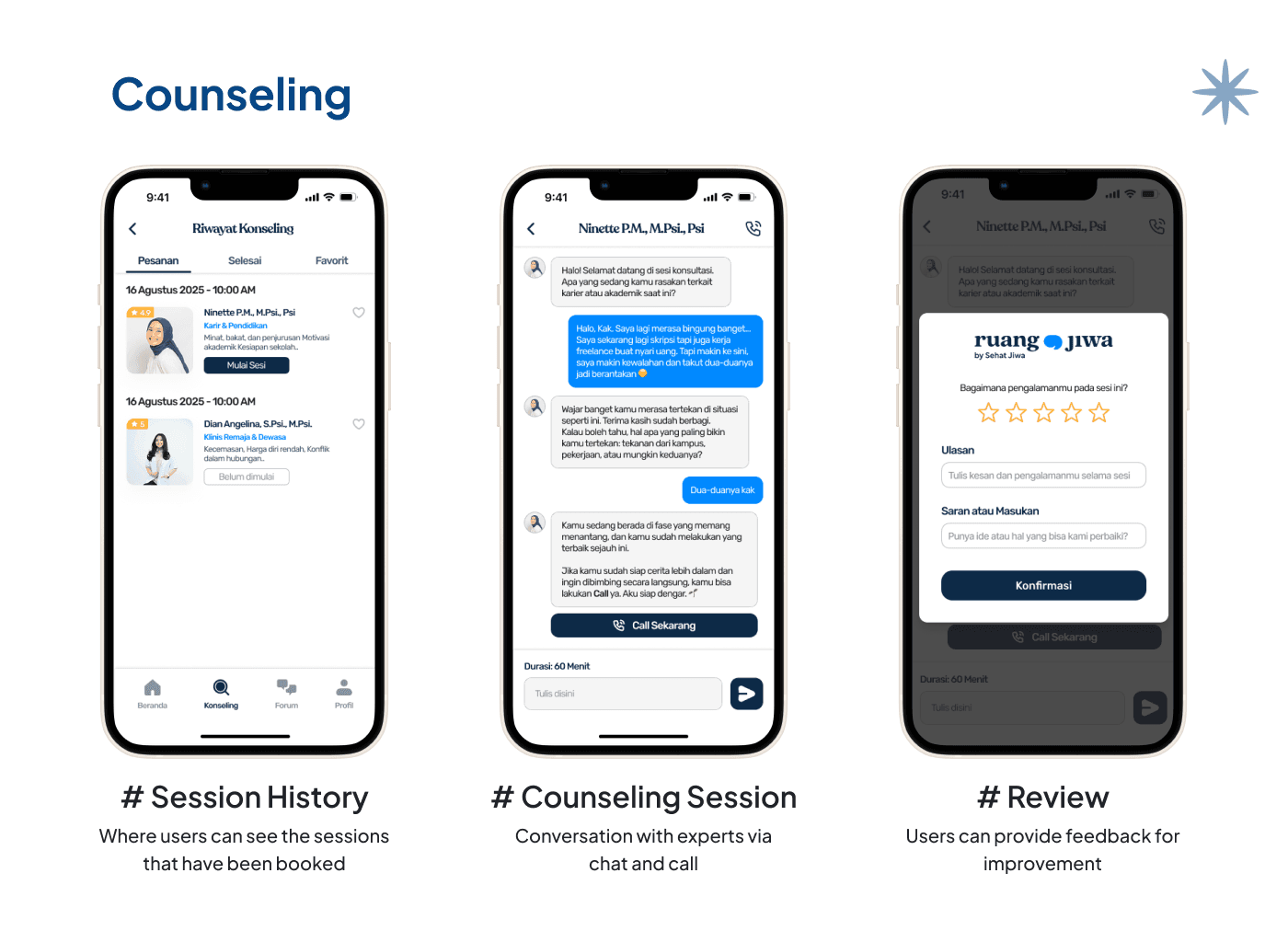
Easy and direct access to professional psychologist consultations within the app, allowing users to schedule sessions in a simple and flexible way.
User Journey
Discover → Share → Receive Support → Professional Help → Daily Mental Care
Design Process
Specify the Context of Use → Specify Requirements → Produce Design Solution → Evaluate Design
Challenges & Learnings
Designing empathy without causing emotional overload
Building trust through privacy and tone of voice
UX plays a key role in encouraging users to seek professional help
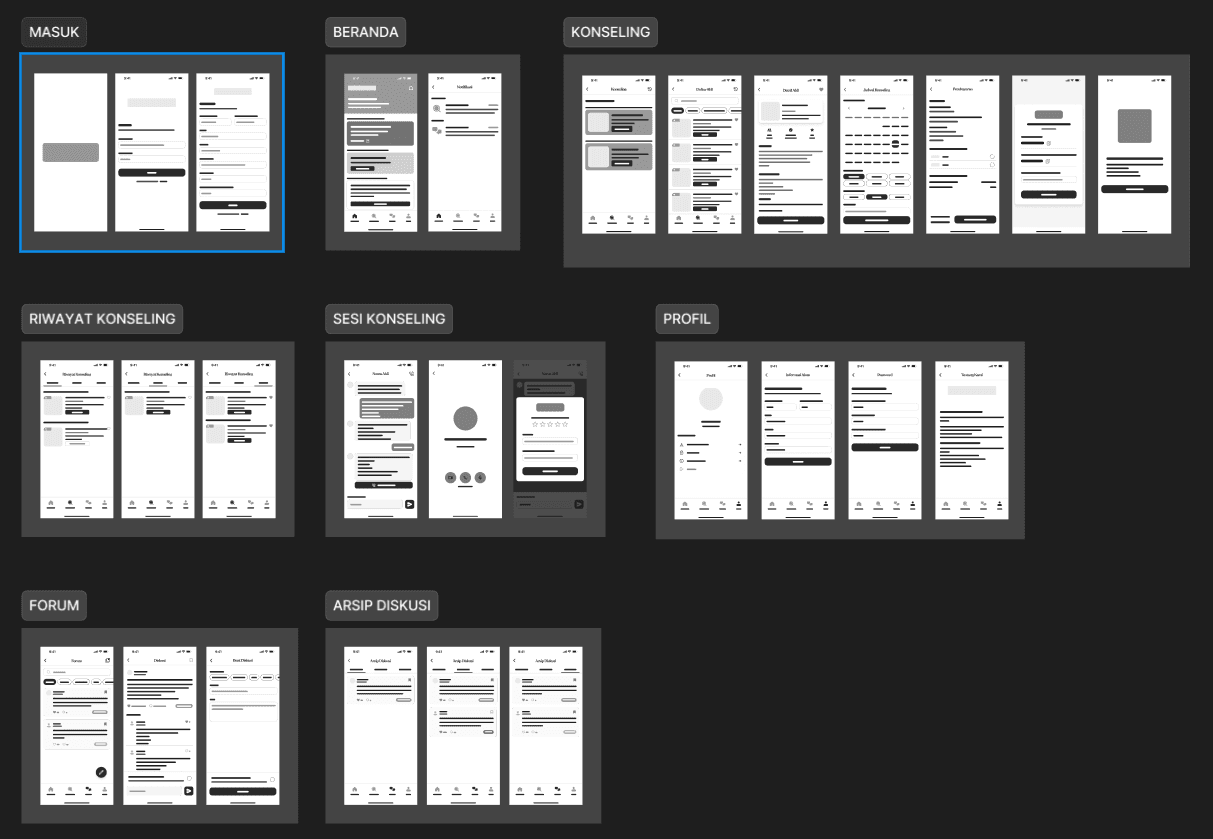
Wireframe
Outcome
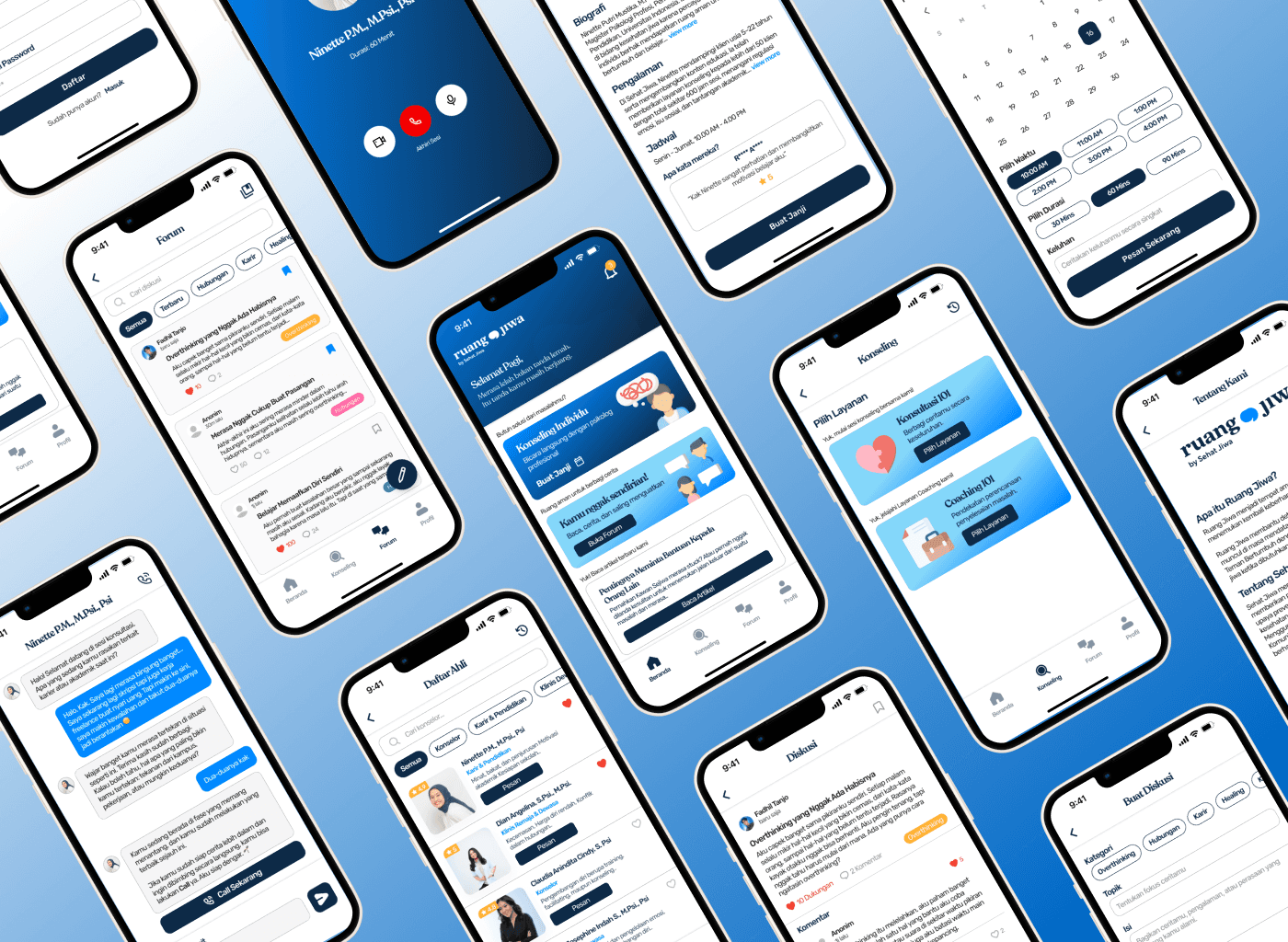
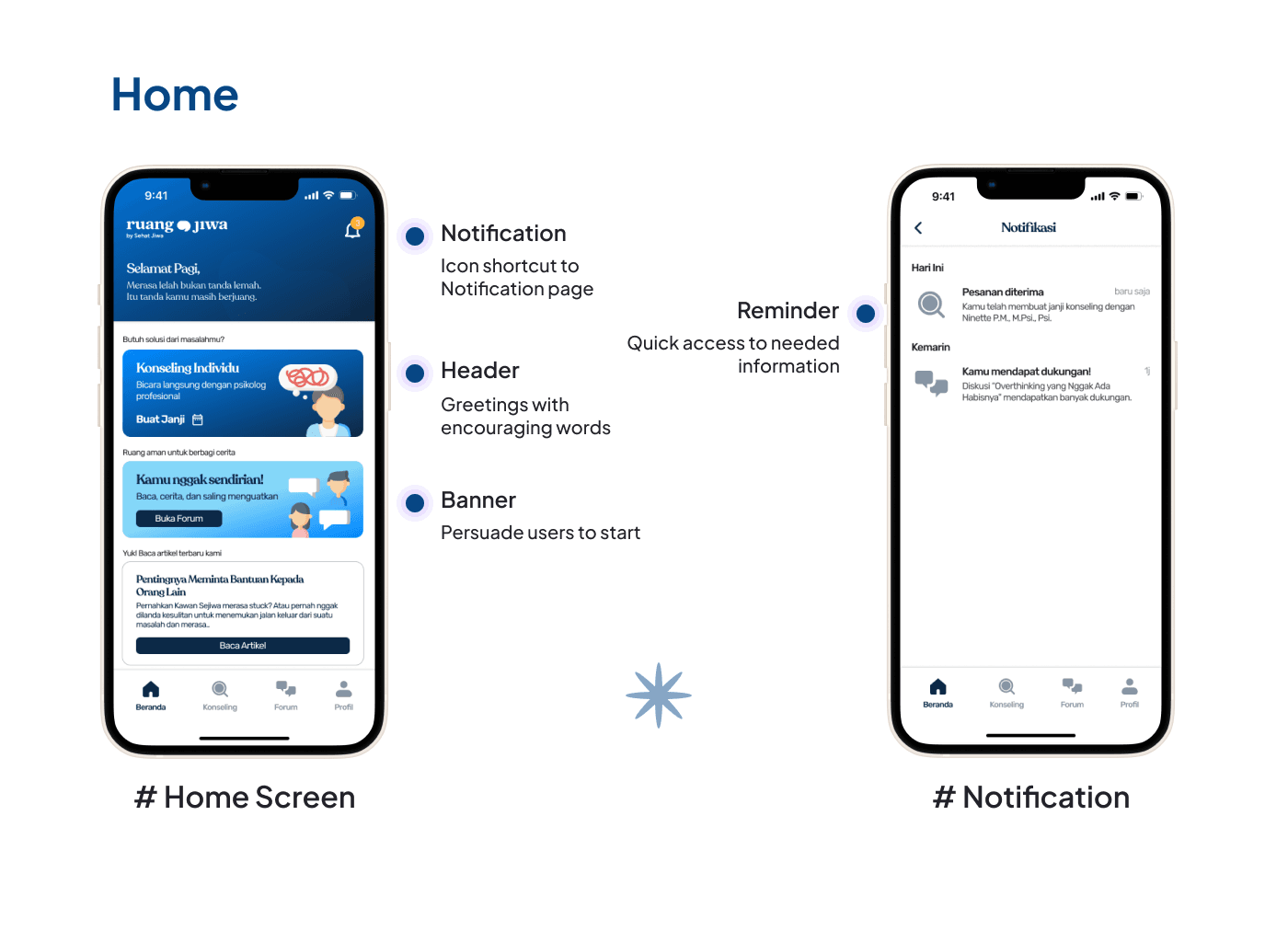
A high-fidelity interactive mobile prototype was successfully designed, covering the main user flows of Ruang Jiwa, including community interaction, anonymous sharing, and psychologist session booking.
The prototype demonstrates clear information hierarchy, intuitive navigation, and user-centered interaction patterns, and was validated through usability testing.
Usability Testing
Usability testing was conducted using the System Usability Scale (SUS) method to evaluate the overall user experience of the Ruang Jiwa application.
Respondents criteria:
Individuals aged 17 years and above
Having an interest or need in counseling services, mental health, or online discussion forums
Varying levels of experience in psychological support services (both users and non-users).
The testing resulted in an average SUS score of 85.75, which falls under Grade A with an “Excellent” adjective rating, indicating a high level of usability and user satisfaction.
Conclusion
The UI/UX design of the Ruang Jiwa application was successfully developed using a User-Centered Design approach. The app was designed based on identified user needs, featuring clear interface design and intuitive interaction flows that effectively support the core goals of the application.
With this foundation, Ruang Jiwa shows strong potential to grow into a scalable mental health platform that delivers meaningful social impact and sustainable business value.