Project Overview
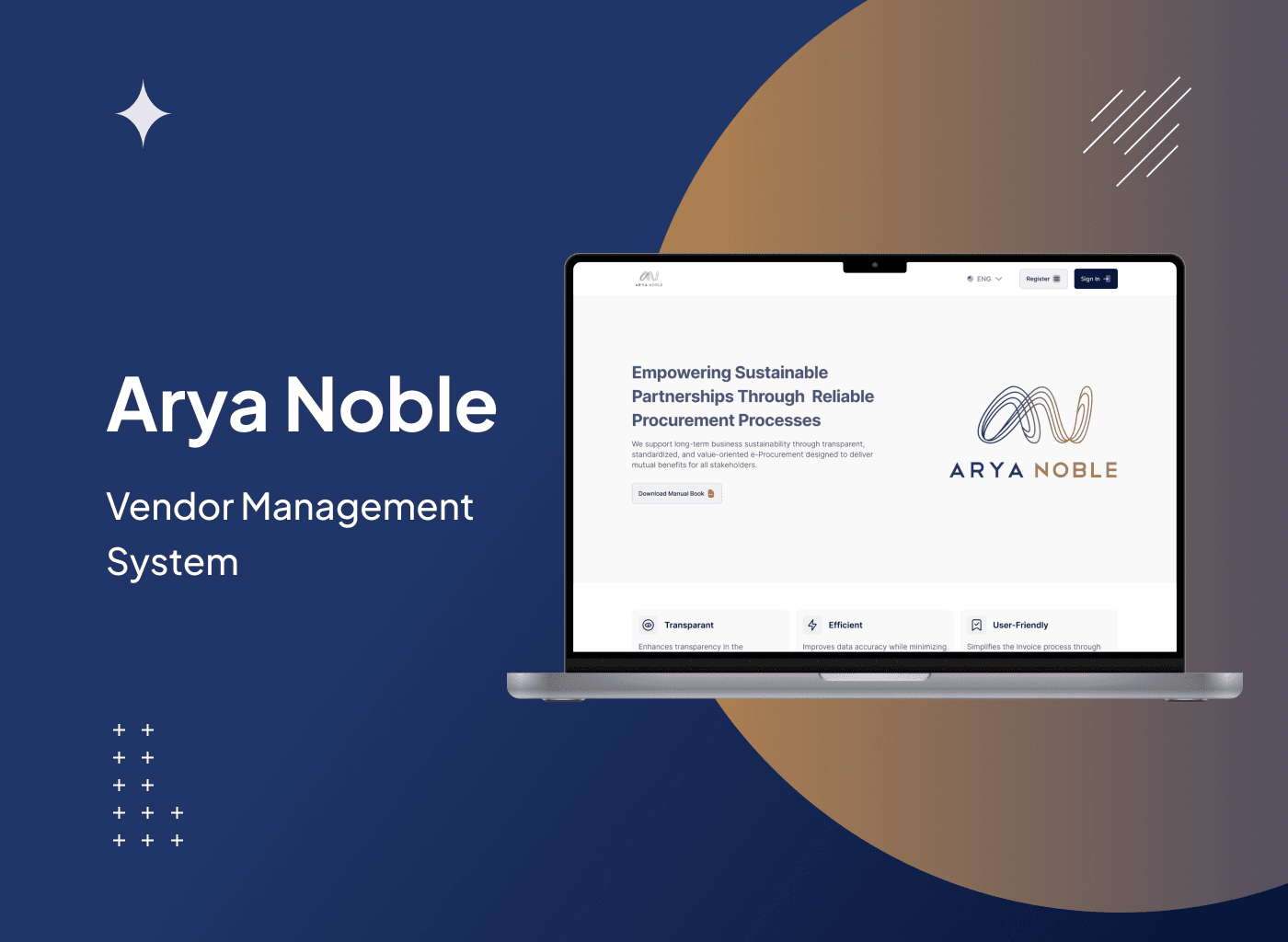
Redesign and feature enhancement of an internal E-Procurement & Vendor Management System to improve usability, workflow clarity, and interface consistency across modules.
Role: UI/UX Designer
Company: Datasea Inc
Platform: Web (Enterprise System)
Team: PM, Backend, Frontend, QA
Problem
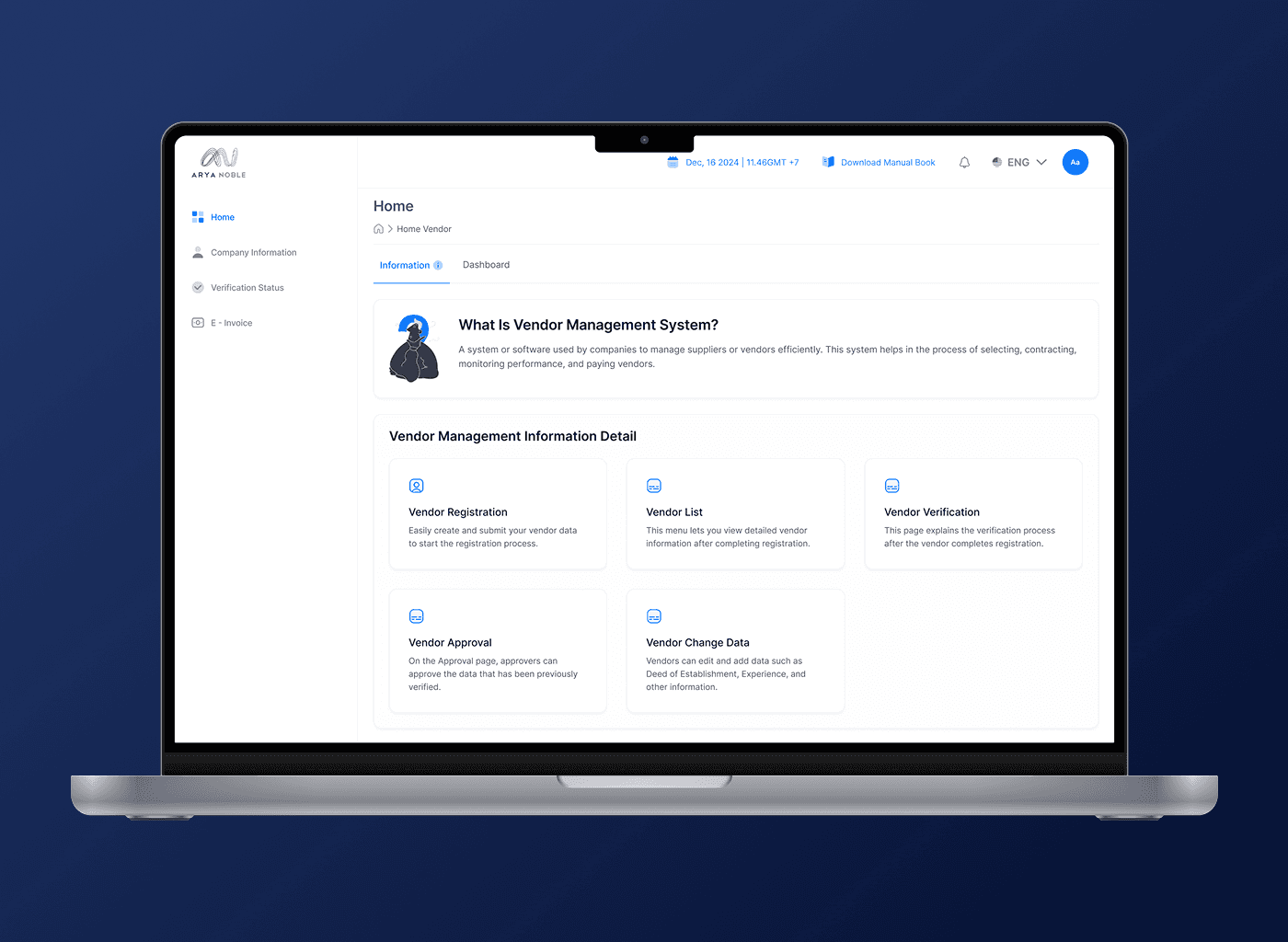
Arya Noble had not previously used a dedicated E-Procurement and Vendor Management System.
To address this, Datasea implemented an E-Procurement system based on an existing internal system template. The challenge was to adapt and customize this template to align with Arya Noble’s specific business needs, workflows, and procurement processes, while maintaining system consistency and development efficiency.
Key challenges included:
Translating Arya Noble’s procurement needs into a structured digital workflow
Adapting an existing system template to a new business context
Ensuring usability and clarity for first-time system users
Aligning customized features with the base system architecture
My Role & Responsibilities
As a UI/UX Designer, I contributed to this project by:
Collaborated with PM and developers to redesign key interfaces
Worked on feature revamp for procurement and vendor modules
Collaborated with the team to define system flows and feature documentation
Conducted UI/UX QA to ensure design consistency and usability
Design Process
Given the nature of an enterprise system and an ongoing product, the design process focused on iterative improvement rather than a full end-to-end redesign.
1. Understanding Requirements
Reviewed business requirements and feature requests from the Product Manager
Analyzed existing screens and workflows to identify usability and consistency issues
2. Interface Redesign & Feature Enhancement
Improved layout hierarchy for key procurement and vendor management screens
Refined information structure to make complex data easier to scan
Updated UI elements to align with a more consistent design pattern across modules
3. System Blueprint Development
Supported the documentation of user flows and feature logic
Helped define screen relationships and key feature specifications to improve team alignment
4. Design QA & Iteration
Conducted design QA during development
Identified UI inconsistencies and usability issues
Proposed improvements and worked closely with developers to ensure proper implementation
Key Contributions
Redesigned core interfaces for procurement and vendor management features
Improved visual consistency and layout structure across system modules
Collaborated with the team to define system flows and feature documentation
Performed design QA to ensure usability and UI standards
Outcome & Impact
Improved workflow clarity for internal users
More consistent and structured UI across multiple system modules
Better alignment between design, development, and product teams
Some visuals are limited due to NDA.
Context - RFQ Management Interface
The RFQ (Request for Quotation) feature is a core part of the E-Procurement workflow
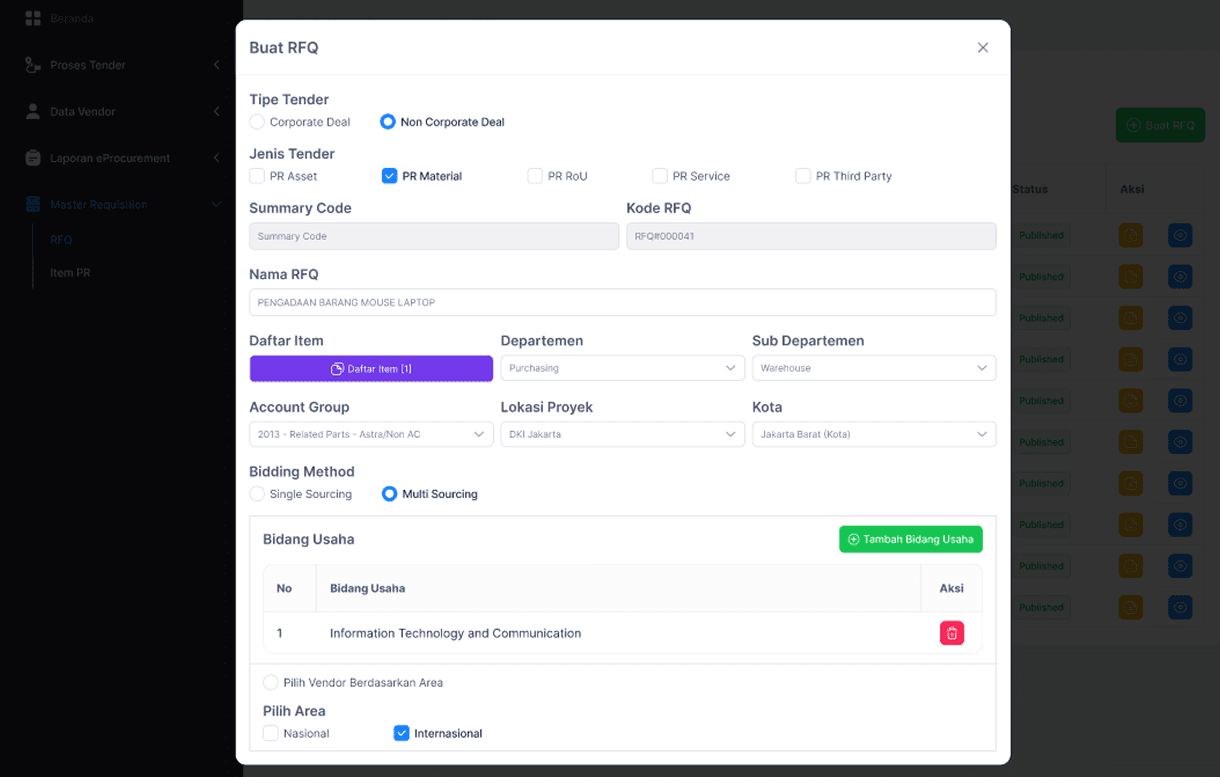
Before
RFQ interface adapted directly from a base system template
Dense form layout with limited workflow guidance
Low scannability in RFQ list and data-heavy tables
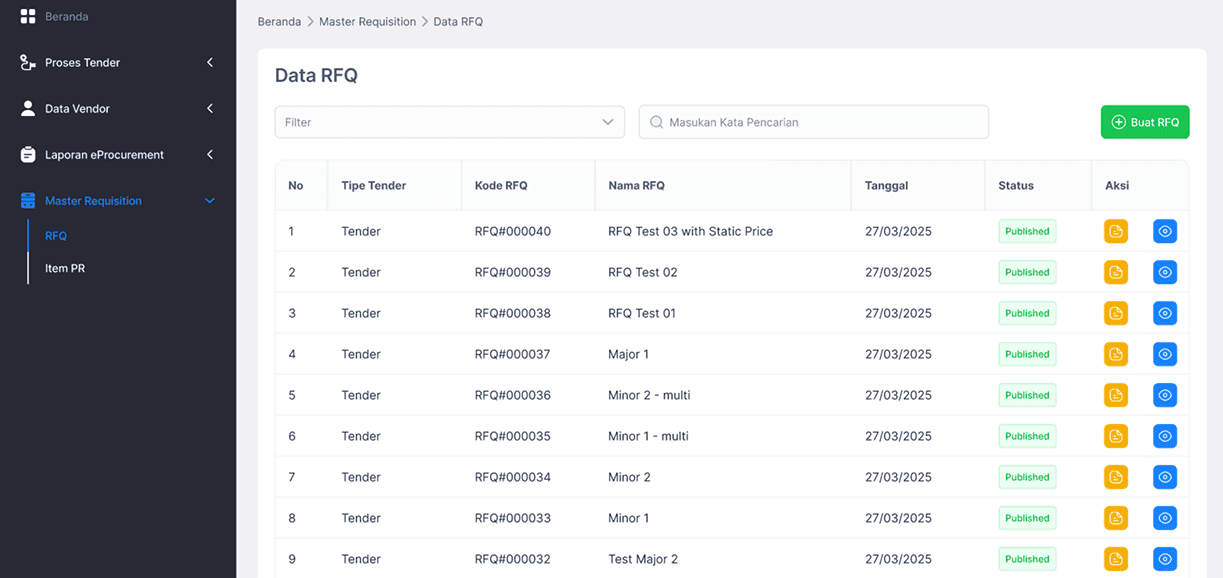
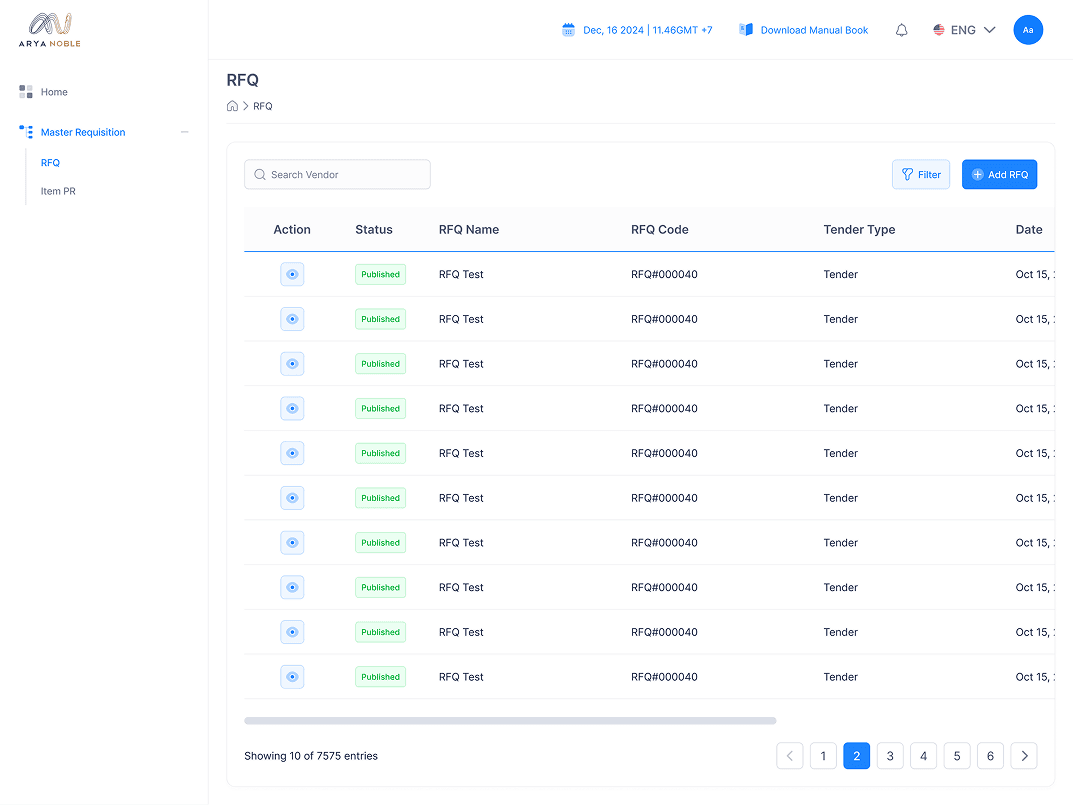
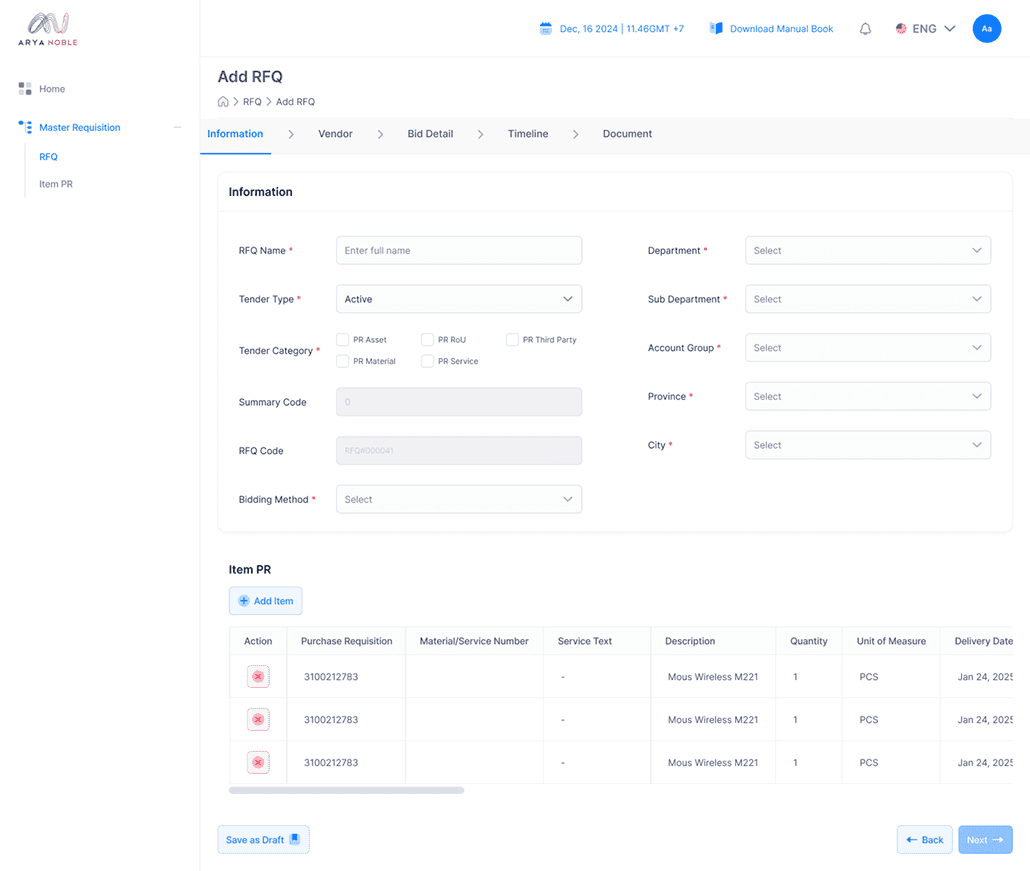
After
Step-based RFQ creation flow for clearer process understanding
Improved information hierarchy and field grouping
Enhanced table scannability and consistent UI patterns aligned with Arya Noble’s workflow
Context - Blueprint: Vendor Blacklist
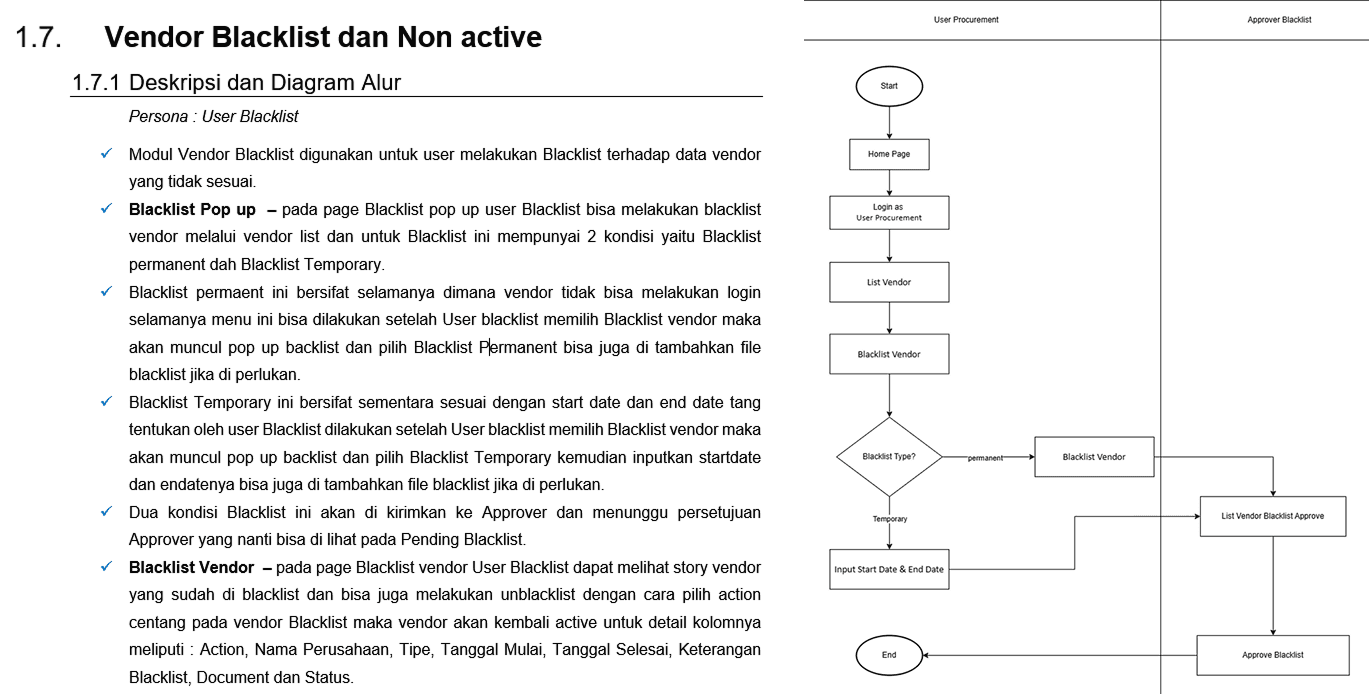
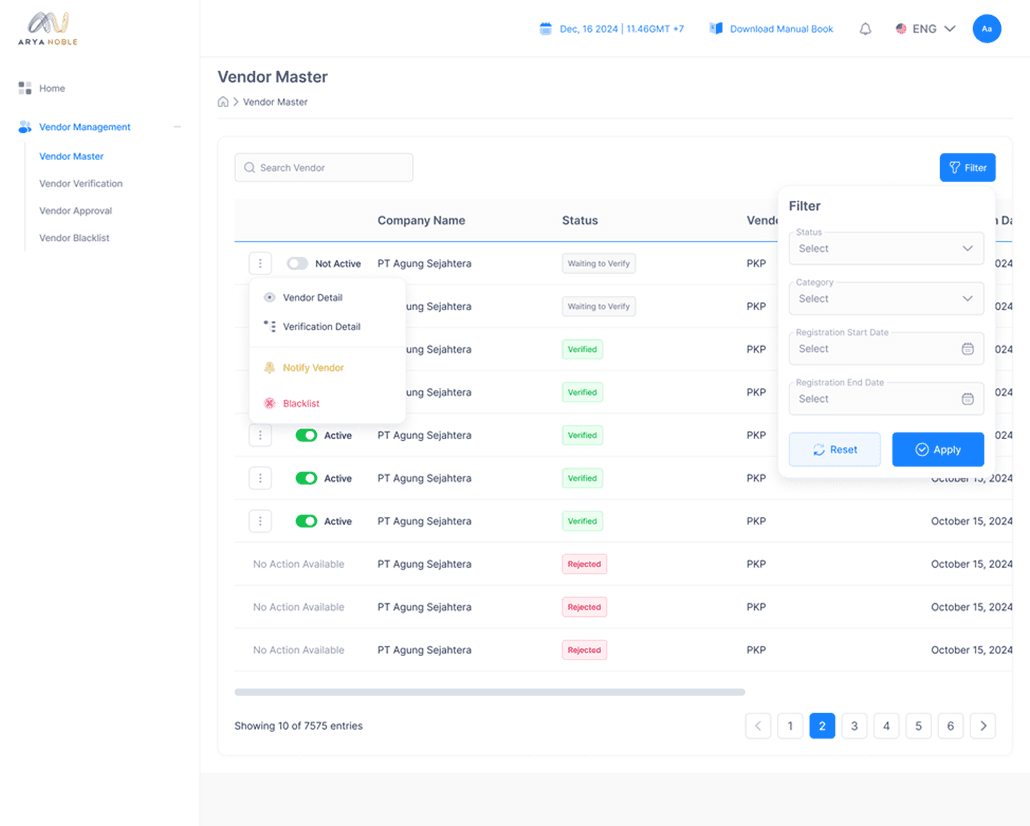
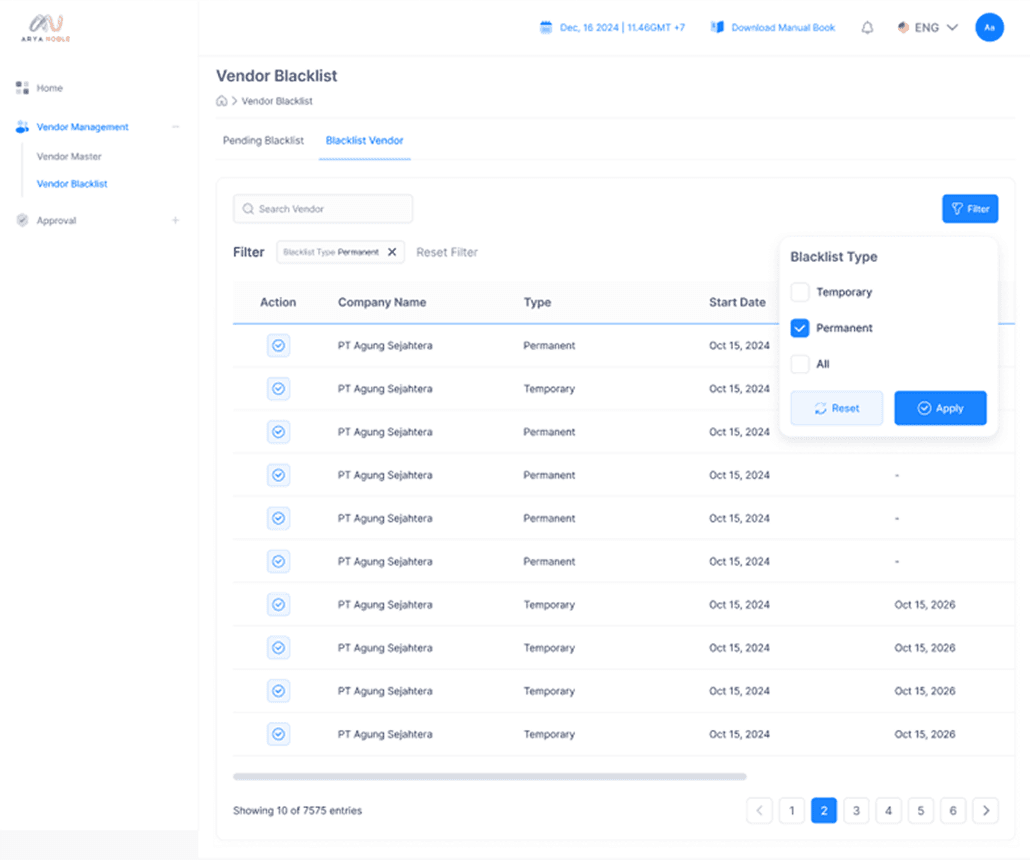
The Vendor Blacklist feature is designed to help procurement teams manage vendor eligibility by identifying and restricting vendors who do not meet compliance, performance, or policy standards.
Interface
The interface focuses on:
A structured blacklist management view for adding, editing, and reviewing blacklisted vendors
Clear status indicators and blacklist reasons to support decision-making
Integration points with RFQ and vendor selection flows to prevent unintended vendor participation
Reflection
This project strengthened my experience working on enterprise systems, collaborating within cross-functional teams, and balancing usability improvements with real-world development constraints. It also enhanced my ability to contribute effectively even when handling partial ownership within a larger product ecosystem.